Commercial Fire & Smoke Damage Restoration in Little Rock, AR
Commercial fire damage in Little Rock extends far beyond the burn area — smoke migrates through HVAC ductwork, soot deposits on every surface, and the odor embeds in porous materials throughout the building. Effective commercial fire restoration in Little Rock, AR requires addressing the visible fire damage, the hidden smoke migration, and the business-interruption timeline simultaneously. Service Restoration handles fire damage, smoke remediation, odor elimination, and full reconstruction under one company.
fire Damage Cleanup
Little Rock commercial fire risk spans the full spectrum — River Market District’s dense restaurant commercial drives kitchen fire frequency, UAMS carries healthcare-specific fire protocols across the state’s largest medical complex, state government buildings require security-coordinated fire response, and Port of Little Rock industrial carries warehouse and logistics fire risk. Downtown high-rise office and hotel fires create vertical smoke-migration and multi-floor evacuation complexity.
Smoke damage in Pulaski County commercial buildings follows the HVAC system — a kitchen fire that seems contained to one tenant space produces smoke that travels through shared ductwork into adjacent spaces, guest rooms above, and common areas throughout the building. The fire department addresses the fire; the smoke migration is what creates the commercial claim. Every surface in the smoke path requires assessment — some need cleaning, some need sealing, some need replacement. The difference between a $50,000 fire claim and a $500,000 fire claim is usually the smoke, not the flames.
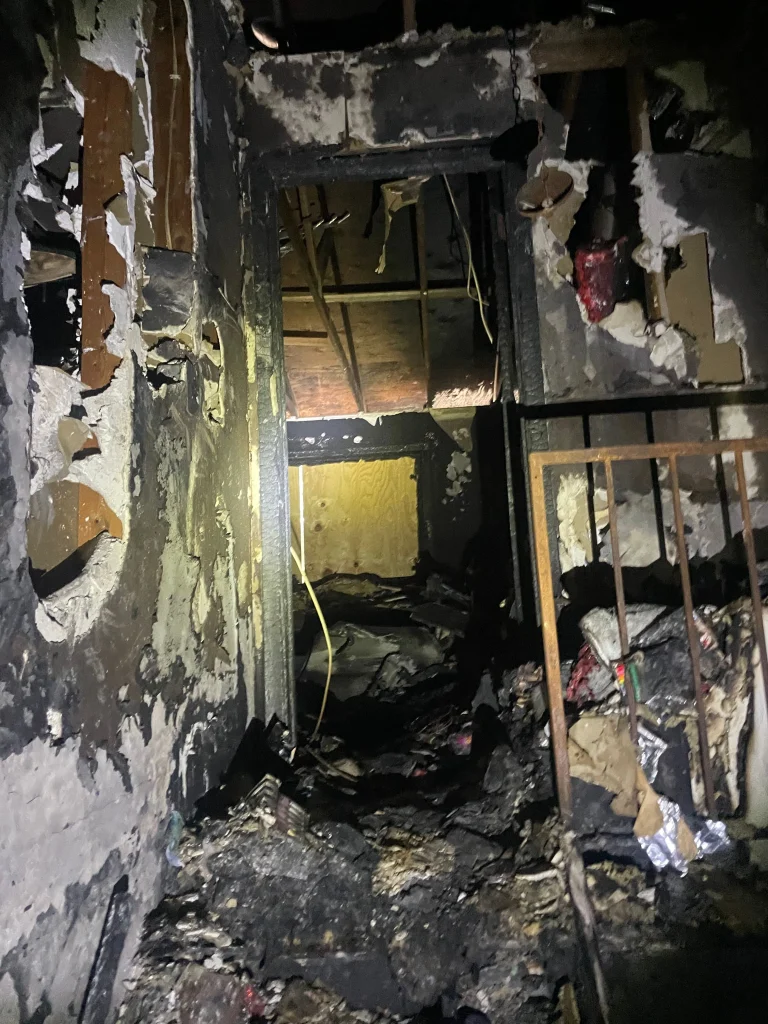
Little Rock Damage Restoration

Service Restoration’s commercial fire response in Little Rock begins with emergency board-up and tarping to prevent secondary water damage from fire-suppression efforts and weather exposure. Fire damage assessment uses thermal imaging to identify heat damage beyond the visible burn area and systematic investigation of concealed spaces — wall cavities, ceiling plenums, and HVAC ductwork — to document the full smoke-migration footprint.
Smoke and soot restoration proceeds surface by surface — dry sponge cleaning for light residue, wet cleaning for heavy soot, and HEPA vacuuming for particulate removal. Odor elimination uses hydroxyl generators and thermal fogging for embedded smoke odor in porous materials. HVAC cleaning removes smoke residue from ductwork that would otherwise redistribute odor throughout the building every time the system runs.
Protecting Your Business During Restoration
Commercial fire losses in Little Rock create the most complex insurance claims — separating fire damage, smoke damage, water damage from suppression, and business-interruption costs into the categories adjusters need. Service Restoration’s documentation photographs and itemizes every affected surface, documents the smoke-migration path, and provides daily progress reports formatted for commercial insurance processing.
Reconstruction after fire damage starts while remediation continues in unaffected areas — phasing work to return portions of the property to service as quickly as possible. One company from emergency board-up through final reconstruction eliminates the weeks of coordination delay that occur when Pulaski County property managers hire separate vendors for each phase.
Frequently Asked Questions
Additional Services in Little Rock
States We Service
Commercial Water Damage Cleanup is powered by Service Restoration and serves commercial properties across listed response markets. Service availability may vary by location and loss size; call to confirm dispatch.
Need Emergency Commercial Restoration?
Call 24/7 for immediate dispatch and emergency response.