24/7 Emergency Commercial Response

Commercial Water & Fire Damage Restoration in Grand Island, NE

Grand Island anchors the Platte Valley — JBS USA beef processing, Fonner Park events, and I-80 corridor commercial create a market where food-processing industrial restoration and tornado-belt storm damage drive commercial demand.

Why Grand Island Commercial Properties Need Specialized Restoration

River flood restoration in Grand Island involves Category 3 water — grossly contaminated with biological, chemical, and sediment contaminants that require specialized extraction, antimicrobial treatment, and in most cases removal and replacement of affected building materials. Flood restoration is fundamentally different from a clean-water pipe burst, and the protocols, equipment, and disposal requirements reflect that difference. Flood insurance documentation requires specific separation of flood damage from non-flood damage — improper documentation creates claim disputes between property policies and flood policies. Grand Island’s commercial properties along Platte River need a restoration partner that understands flood-specific damage classifications, carries the equipment for large-scale contaminated-water extraction, and produces documentation formatted for both NFIP and commercial property claims.
Air movers and air scrubbers staged for water damage restoration at affordable housing facility

Commercial Properties We Restore In Hall County

Grand Island’s commercial restoration demand spans hotels and hospitality; healthcare facilities; multifamily and apartment communities; retail centers; industrial and manufacturing. Each property type carries specific restoration requirements — hotels and hospitality involve guest displacement and brand-standard finish restoration, healthcare facilities require infection-control protocols during restoration, multifamily and apartment communities involve tenant-coordination and unit-by-unit documentation, and industrial and warehouse commercial often involves specialized equipment restoration. Service Restoration carries the equipment capacity, documentation systems, and trade coordination to handle all of these property types across Hall County.

Common Water Damage Risks Grand Island
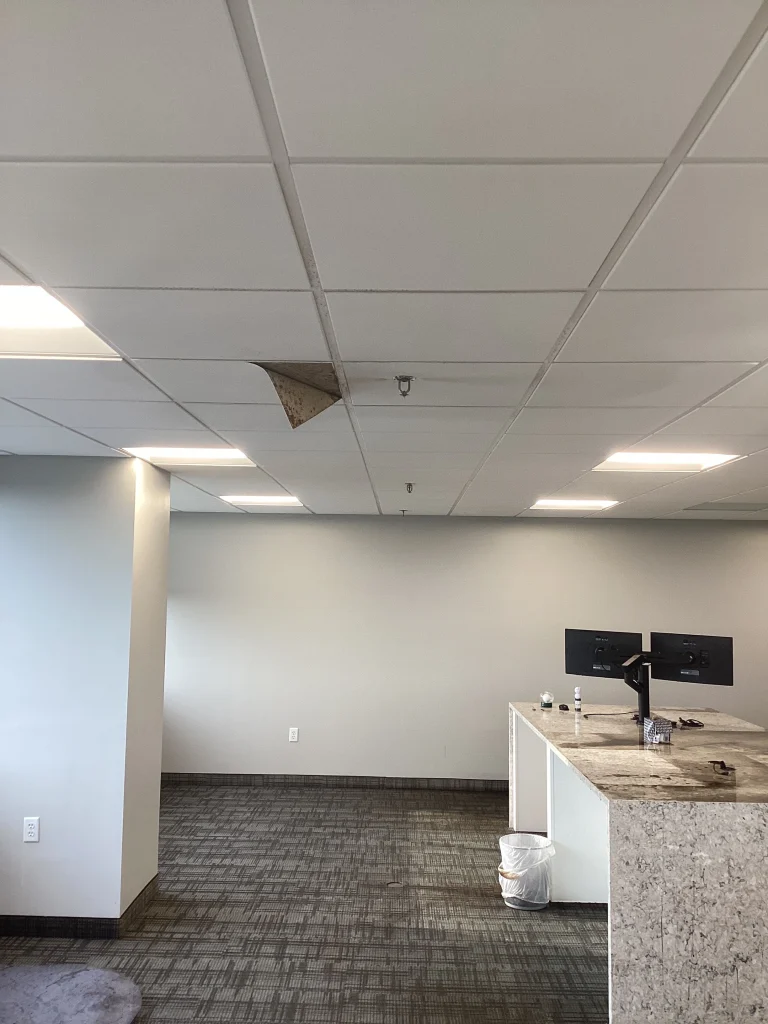
Commercial office building flooded after sprinkler system water line break
Grand Island’s Platte River proximity and Wood River corridor create flood exposure for commercial — the 2019 flooding demonstrated commercial vulnerability. Severe summer storms drive tornado and hail damage across the I-80 corridor. Winter freeze on commercial systems is aggressive. Category 3 flood water carries biological contaminants, sediment, chemical pollutants, and sewage that require specialized personal protective equipment for workers, antimicrobial treatment of affected areas, and in most cases removal and replacement of porous building materials (drywall, insulation, carpet, padding) rather than drying in place. The restoration protocol for river flood damage is fundamentally different from clean-water losses. Flood insurance claims require specific documentation separating flood damage from non-flood damage — wind-driven rain entering through a damaged roof is a property-policy claim, while rising water is a flood-policy claim. Improper documentation creates disputes between carriers. Our flood response identifies and separates damage sources from the first assessment, which prevents claim disputes and accelerates the settlement process.

What to Expect When You Call

Step 1
Emergency Response
Call 855-2GET-DRY — a live dispatcher confirms response timing for Grand Island. Crews arrive with water extraction and emergency stabilization equipment.
Step 2
Assessment & Documentation
Moisture mapping, thermal imaging, and photo documentation from the first hour. Your adjuster receives an itemized scope formatted for commercial claims — covering fire, storm, and water damage.
Step 3
Mitigation Through Rebuild
Structural drying, mold prevention, smoke remediation, and full reconstruction — one company from emergency call through final walkthrough.

Grand Island Fire Damage & Smoke Risks

Grand Island’s food processing (JBS USA, Chef’s Warehouse), manufacturing, and I-80 corridor commercial concentrate fire risk in industrial processing, electrical infrastructure, and commercial kitchens. Post-flood electrical fires are a secondary risk — water damage to electrical panels, wiring, and equipment creates fire hazards when power is restored. Our flood response includes electrical assessment and coordination with licensed electricians before energizing any flood-affected commercial system. Smoke damage in flood-affected commercial creates compound loss scenarios — fire damage on top of flood damage requires careful documentation separating both damage sources for insurance purposes.
How do you handle river flood damage to Grand Island commercial properties?

River flood water is classified as Category 3 (grossly contaminated) requiring specialized protocols — extraction, antimicrobial treatment, aggressive drying, and in many cases removal and replacement of affected building materials. Grand Island commercial along Platte River carries this exposure during high-water events.

What is different about flood restoration vs a pipe burst?

Category 3 flood water carries biological contaminants, sediment, and chemical pollutants requiring specific extraction, antimicrobial treatment, and disposal protocols. A clean-water pipe burst (Category 1) can often be dried in place — river flood water usually requires material removal and replacement.

Do you help with flood insurance documentation in Grand Island?

Yes — flood claims require specific documentation separating flood damage from non-flood damage. Our assessment identifies and documents damage sources from the first visit, which prevents claim disputes between property policies and flood policies.

How fast can you respond during a Grand Island flood event?

Call 855-2GET-DRY (855-243-8379) — during major flood events, response timing depends on water-level accessibility and crew positioning. We begin work as soon as access is safe.

What about mold after flooding in Grand Island?

Mold growth after flooding is aggressive — Category 3 water combined with building materials creates rapid microbial colonization. Our flood response includes immediate mold containment and prevention protocols designed to limit secondary biological losses.

Do you handle both flood cleanup and reconstruction?

Yes — mitigation and reconstruction handled by one company so Grand Island property owners have a single point of contact from emergency flood response through final rebuild.

Nearby Service Areas

Coverage Area

Commercial Water Damage Cleanup is powered by Service Restoration and serves commercial properties across listed response markets. Service availability may vary by location and loss size; call to confirm dispatch.

Need Emergency Commercial Restoration?

Call 24/7 for immediate dispatch and emergency response.