24/7 Emergency Commercial Response

Commercial Water & Fire Damage Restoration in St. Paul, MN

St. Paul is Minnesota’s state capital — the Capitol complex, state office buildings, and government commercial create institutional restoration demand that requires security-coordination and government-contracting protocols. Lowertown’s warehouse district transformation from industrial to residential-commercial loft space creates one of the most architecturally interesting and restoration-challenging commercial districts in the Twin Cities.

Why St. Paul Commercial Properties Need Specialized Restoration

Industrial and manufacturing restoration in St. Paul requires understanding of process equipment, contamination classification, and production-timeline impacts that standard commercial restorers do not have. Process-water failures, chemical spills, and refrigeration system losses involve Category 2 and 3 water classifications with specific extraction, antimicrobial, and disposal protocols. Equipment restoration often requires manufacturer coordination. Every hour of production downtime compounds the cost of an industrial water or fire loss. St. Paul’s industrial commercial needs a restoration partner that coordinates with plant safety and environmental compliance, understands hazmat and confined-space protocols, and produces documentation that supports both property-damage and business-interruption insurance claims.
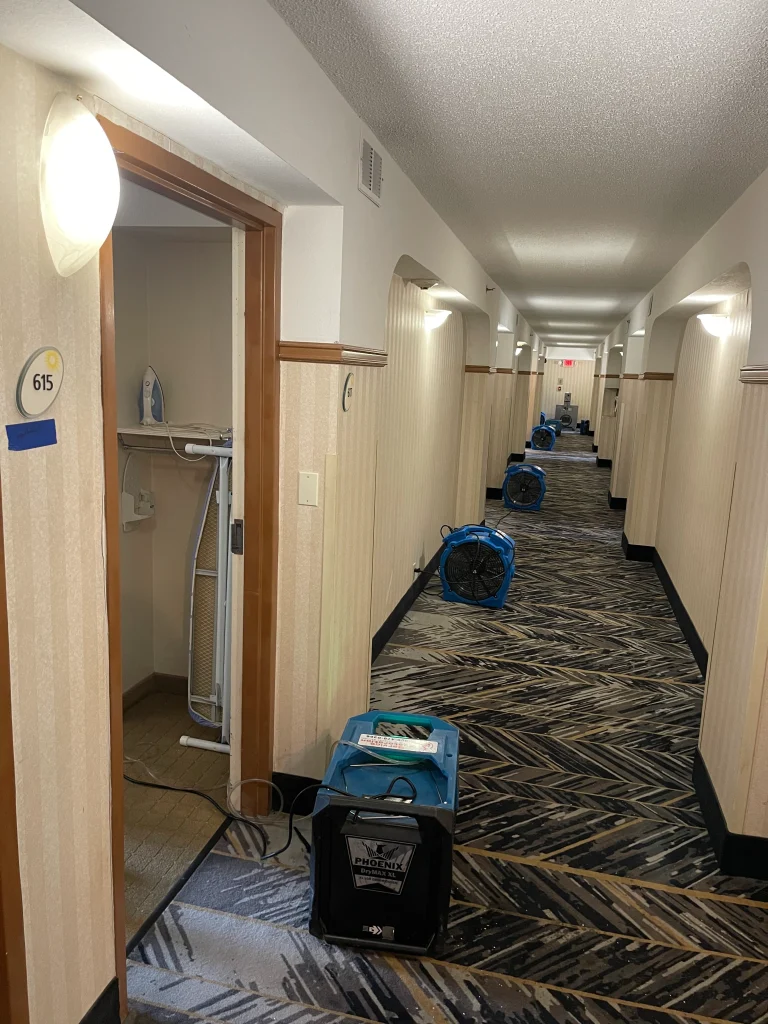
Air movers staged for commercial water damage restoration caused by sprinkler system failure

Commercial Properties We Restore In Ramsey County

St. Paul’s commercial restoration demand spans state capitol complex and government commercial; xcel energy center and rivercentre convention complex; regions hospital and healthpartners; lowertown warehouse conversions; university avenue light-rail corridor commercial; grand avenue and highland park retail and hospitality. Each property type carries specific restoration requirements — hotels and hospitality involve guest displacement and brand-standard finish restoration, healthcare facilities require infection-control protocols during restoration, multifamily and apartment communities involve tenant-coordination and unit-by-unit documentation, and industrial and warehouse commercial often involves specialized equipment restoration. Service Restoration carries the equipment capacity, documentation systems, and trade coordination to handle all of these property types across Ramsey County.

Common Water Damage Risks St. Paul

Hotel sixth floor water damage restoration and structural drying
St. Paul’s commercial water exposure centers on the State Capitol complex, Lowertown warehouse district, and the Mississippi River corridor. Lowertown’s century-old warehouse conversions to residential lofts and commercial carry aging plumbing in buildings not originally designed for modern water loads. The Xcel Energy Center and RiverCentre convention complex face sprinkler and mechanical-system exposure on massive event-venue square footage. State government buildings carry institutional water exposure with security-coordination requirements. Industrial water losses often involve specialized water categories that standard restoration doesn’t address. Process-water failures, chemical spills, and contaminated flood water are classified as Category 2 or 3 under IICRC standards, requiring specific extraction protocols, antimicrobial treatment, and in many cases disposal of affected materials rather than drying in place. Equipment restoration in manufacturing environments often requires manufacturer coordination and validation before production can resume. The production-downtime cost of an industrial water loss typically exceeds the direct property damage. Our industrial response prioritizes critical production areas, coordinates with plant management on phased restoration, and documents both the property damage and operational impact for comprehensive insurance claims.

What to Expect When You Call

Step 1
Emergency Response
Call 855-2GET-DRY — a live dispatcher confirms response timing for St. Paul. Crews arrive with water extraction and emergency stabilization equipment.
Step 2
Assessment & Documentation
Moisture mapping, thermal imaging, and photo documentation from the first hour. Your adjuster receives an itemized scope formatted for commercial claims — covering fire, storm, and water damage.
Step 3
Mitigation Through Rebuild
Structural drying, mold prevention, smoke remediation, and full reconstruction — one company from emergency call through final walkthrough.

St. Paul Fire Damage & Smoke Risks

St. Paul fire risk concentrates in Lowertown’s century-old warehouse construction — shared-wall brick buildings with timber-frame interiors where fire migrates between converted loft spaces and ground-floor commercial. Grand Avenue’s dense restaurant corridor drives kitchen fire frequency in older commercial stock. State Capitol complex and government buildings carry institutional fire risk with security and access requirements that affect restoration logistics. Industrial fire losses can involve hazmat response, chemical exposure assessment, and environmental compliance coordination that standard commercial restoration companies cannot provide. Process equipment, raw materials, and finished inventory may require specialized assessment and documentation beyond the structural fire damage itself. The production-downtime cost of an industrial fire typically far exceeds the direct property damage. Our industrial fire response coordinates with plant safety, environmental compliance, and facility management throughout the project — and documents both the physical damage and operational impact for comprehensive insurance claims that include business-interruption components.
Do you restore industrial and manufacturing commercial in St. Paul?

Yes — industrial restoration requires understanding of process equipment, contamination classification, and production-timeline impacts. St. Paul industrial losses often involve specialized water categories (Category 2 or 3 from process sources) and equipment that requires manufacturer-coordinated restoration.

How do you handle contaminated water in St. Paul processing facilities?

Process-water, chemical spills, and contaminated flood water are classified and treated according to IICRC standards — Category 2 and 3 water require specific extraction, antimicrobial treatment, and disposal protocols that differ from standard commercial water damage response.

What about production downtime during restoration?

We understand that production downtime compounds the cost of every industrial loss. Our response minimizes operational interruption — phased restoration, temporary equipment where feasible, and coordination with plant management to prioritize critical production areas.

Do you document industrial losses for commercial insurance?

Yes — moisture readings, drying logs, photo records, equipment damage assessment, and an itemized scope prepared for your adjuster. Industrial claims often involve both property damage and business-interruption components — our documentation supports both.

Can you coordinate with facility safety and environmental teams?

Yes — industrial restoration coordinates with plant safety, environmental compliance, and facility management throughout the project. Hazmat, confined-space, and lockout-tagout protocols are followed as required by the facility.

Do you handle both emergency cleanup and reconstruction?

Yes — mitigation and reconstruction handled by one company so St. Paul facility managers have a single point of contact from the emergency call through final rebuild.

Nearby Service Areas

Coverage Area
Commercial Water Damage Cleanup is powered by Service Restoration and serves commercial properties across listed response markets. Service availability may vary by location and loss size; call to confirm dispatch.
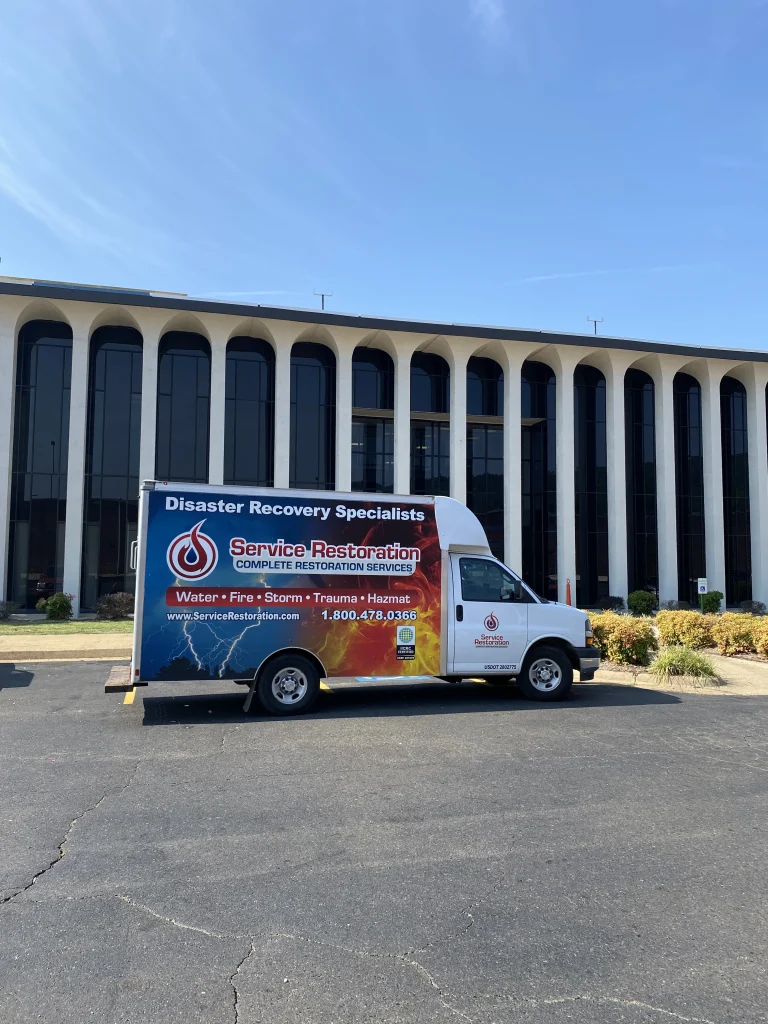
Service Restoration crew on site at a bank performing water damage restoration

Need Emergency Commercial Restoration?

Call 24/7 for immediate dispatch and emergency response.