Commercial Water & Fire Damage Restoration in Topeka, KS
Topeka is Kansas’s state capital — state government complex, Stormont Vail Health, and a revitalizing downtown create a market where institutional losses and Kansas River flood exposure intersect with Tornado Alley storm damage.
Why Topeka Commercial Properties Need Specialized Restoration

Commercial Properties We Restore In Shawnee County
Common Water Damage Risks Topeka
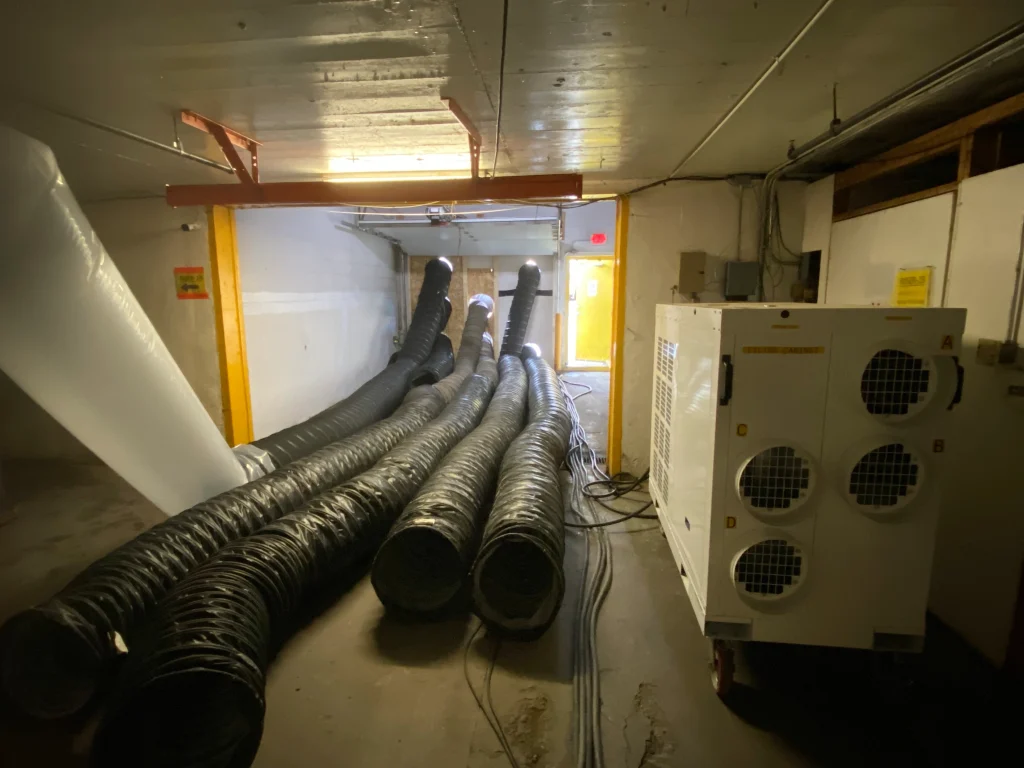
What to Expect When You Call
Topeka Fire Damage & Smoke Risks
How do you respond after a tornado damages Topeka commercial property?
Post-tornado response starts with emergency board-up and tarping to prevent secondary water damage from rain entering through roof and envelope breaches. Water extraction follows immediately — every rain band after the initial event is a new water loss if the envelope is compromised.
Can you handle multiple commercial properties after a major tornado event?
Yes — major tornado events often damage dozens of commercial properties simultaneously. Service Restoration coordinates surge response across multiple sites, prioritizing by loss severity and business-interruption impact. Commercial Water Damage Cleanup is powered by Service Restoration and serves commercial properties across listed response markets. Service availability may vary by location and loss size; call to confirm dispatch.
What about water damage that follows tornado roof damage?
Secondary water damage after tornado events often exceeds the initial wind damage in total claim cost. Every rain event after the tornado drives new water through compromised roofs and envelopes — rapid board-up and tarping is the single biggest cost-control measure.
How do you document tornado damage for insurance in Topeka?
Tornado claims require clear separation of wind damage, water damage, and debris-impact damage. Our documentation identifies each damage source from the first assessment — photos, moisture readings, structural notes — organized for your adjuster.
Do you provide emergency board-up and tarping after storms?
Yes — emergency board-up and roof tarping are the first priority after tornado or severe wind events. Closing the building envelope same-day is the single biggest factor in controlling total claim cost.
Do you handle both emergency cleanup and reconstruction?
Yes — mitigation and reconstruction handled by one company so Topeka property owners have a single point of contact from emergency tarping through final rebuild.
Nearby Service Areas
Coverage Area

Need Emergency Commercial Restoration?
Call 24/7 for immediate dispatch and emergency response.