Commercial Water & Fire Damage Restoration in St. Petersburg, FL
St. Petersburg is surrounded by water on three sides — Tampa Bay, Boca Ciega Bay, and the Gulf of Mexico. Johns Hopkins All Children’s Hospital, the Dali Museum, and the Tropicana Field redevelopment (the largest commercial project on the Gulf Coast) sit on a peninsula where hurricane storm surge can arrive from multiple directions simultaneously.
Why St. Petersburg Commercial Properties Need Specialized Restoration

Commercial Properties We Restore In Pinellas County
Common Water Damage Risks St. Petersburg
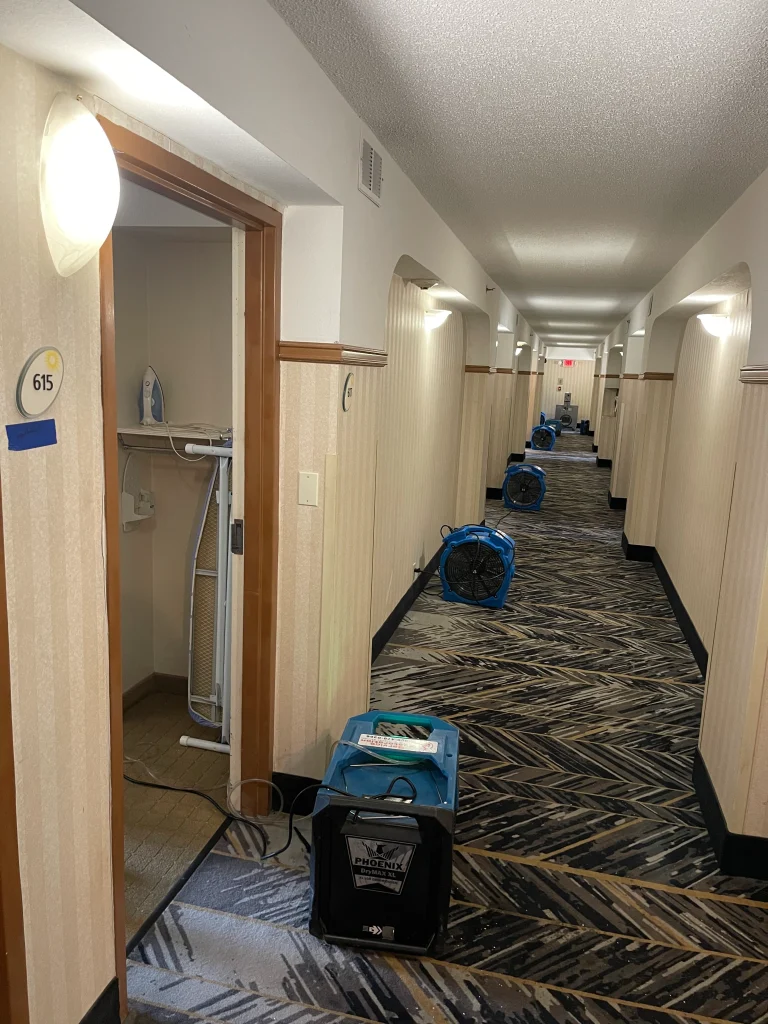
What to Expect When You Call
St. Petersburg Fire Damage & Smoke Risks
How do you handle hurricane-damaged resort and condo properties in St. Petersburg?
Coastal commercial response starts with emergency water extraction and structural stabilization, then moves to aggressive drying designed for salt-water and storm-surge contamination. St. Petersburg resort and condo losses often involve both master association policies and individual unit policies — we document across both. Commercial Water Damage Cleanup is powered by Service Restoration and serves commercial properties across listed response markets. Service availability may vary by location and loss size; call to confirm dispatch.
Do you coordinate with HOA boards and property management in St. Petersburg?
Yes — coastal resort and condo losses require coordination with property managers, HOA boards, and individual unit owners. We produce documentation packages formatted for both master-policy and individual-unit claims, and coordinate access across multiple units when a single event affects an entire building.
What about storm surge vs wind damage documentation?
Proper separation of wind and flood damage matters for insurance — wind damage falls under the property policy while flood requires separate coverage. Our documentation identifies and separates damage sources from the first assessment, which prevents claim disputes later.
How do you prevent mold after hurricane flooding in St. Petersburg?
Coastal humidity combined with storm-water exposure makes mold a near-certain secondary loss without aggressive intervention. Our response includes immediate containment, HEPA filtration, and structural drying designed to return materials to normal moisture content before microbial growth establishes.
Can you restore a St. Petersburg property while keeping part of it operational?
When possible, yes. We phase restoration to isolate affected areas while maintaining operations in unaffected sections — critical for resort and hospitality commercial where business interruption compounds the claim cost.
Do you handle both emergency cleanup and reconstruction?
Yes — mitigation and reconstruction handled by one company so St. Petersburg property owners have a single point of contact from the emergency call through final walkthrough.
Nearby Service Areas
Coverage Area

Need Emergency Commercial Restoration?
Call 24/7 for immediate dispatch and emergency response.