24/7 Emergency Commercial Response

Commercial Water & Fire Damage Restoration in Apalachicola, FL

Apalachicola is Florida’s oyster capital — the town’s commercial value sits in historic hospitality (Gibson Inn, Coombs House Inn), waterfront dining, and a tourism economy built around one of the most intact Victorian-era commercial districts in Florida. A single historic-hotel fire here involves irreplaceable architectural detail and a tourism economy that depends on preserved character.

Why Apalachicola Commercial Properties Need Specialized Restoration

Historic commercial restoration in Apalachicola balances efficient damage mitigation with preservation of original building character. Century-old brick, period millwork, original plaster, and historic finishes require specific drying protocols and restoration techniques that standard commercial response does not address. Aggressive drying that saves a modern building can destroy irreplaceable historic materials. Apalachicola’s historic commercial needs a restoration partner that evaluates original materials individually — preservation is always the first option — and coordinates with local preservation requirements throughout the project. Historic claims often involve replacement-cost considerations for materials that are significantly more expensive to match than modern construction.
Air movers, air scrubbers, and containment set up for water damage restoration at affordable housing complex

Commercial Properties We Restore In Franklin County

Apalachicola’s commercial restoration demand spans historic downtown hotels and bed-and-breakfasts; oyster industry waterfront commercial; coombs house inn and gibson inn historic hospitality; restaurants and galleries; weems memorial hospital. Each property type carries specific restoration requirements — hotels and hospitality involve guest displacement and brand-standard finish restoration, healthcare facilities require infection-control protocols during restoration, multifamily and apartment communities involve tenant-coordination and unit-by-unit documentation, and industrial and warehouse commercial often involves specialized equipment restoration. Service Restoration carries the equipment capacity, documentation systems, and trade coordination to handle all of these property types across Franklin County.

Common Water Damage Risks Apalachicola
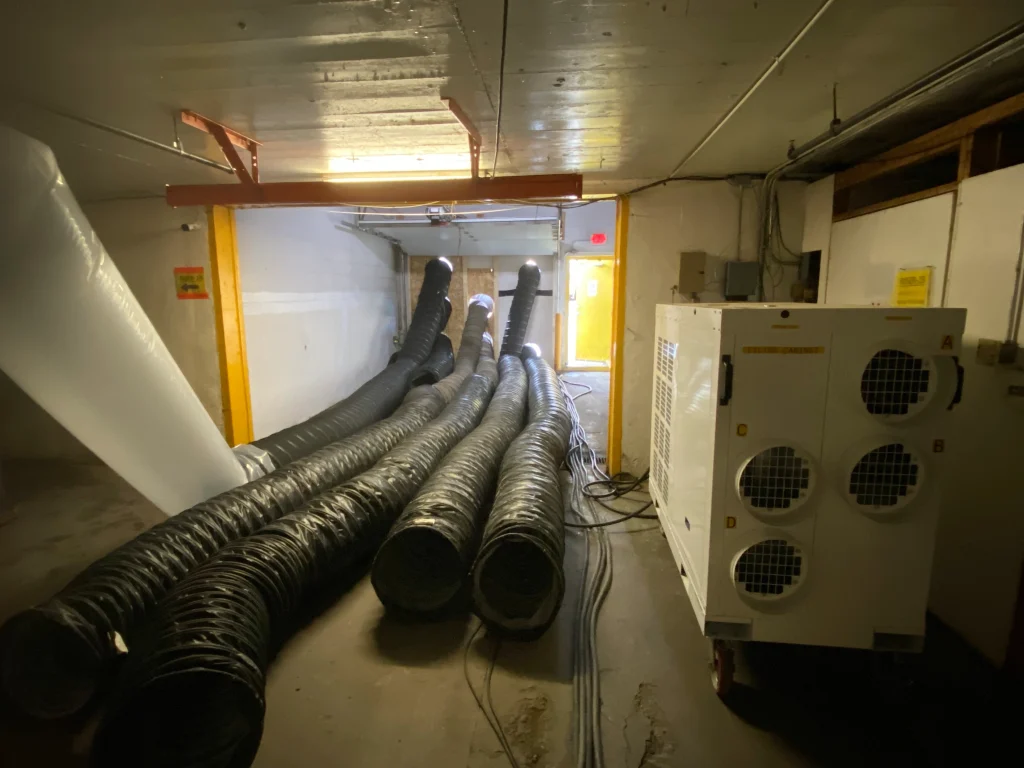
Industrial warehouse structural drying with desiccants, temporary heat, and air movement
Apalachicola sits where the Apalachicola River meets the Gulf — full hurricane exposure combined with river flooding and tidal surge. Hurricane Michael (2018) devastated nearby Panama City and Mexico Beach; Apalachicola’s exposure is comparable. Historic downtown commercial in century-old buildings faces persistent moisture from the river-bay-Gulf convergence. Water damage in historic commercial buildings requires careful material assessment before any drying begins. Original plaster, century-old brick, period millwork, and historic finishes absorb and release moisture differently than modern materials — aggressive drying that would save a modern wall can crack historic plaster and warp original woodwork. Controlled, targeted drying is essential. Older shared-wall construction in historic downtown districts means water migration between adjacent businesses is common — a pipe failure in one building can damage inventory and finishes in the adjacent tenant space through the shared wall assembly. Our historic-district response traces water migration across property boundaries and documents damage for multiple affected property owners and their respective insurance policies.

What to Expect When You Call

Step 1
Emergency Response
Call 855-2GET-DRY — a live dispatcher confirms response timing for Apalachicola. Crews arrive with water extraction and emergency stabilization equipment.
Step 2
Assessment & Documentation
Moisture mapping, thermal imaging, and photo documentation from the first hour. Your adjuster receives an itemized scope formatted for commercial claims — covering fire, storm, and water damage.
Step 3
Mitigation Through Rebuild
Structural drying, mold prevention, smoke remediation, and full reconstruction — one company from emergency call through final walkthrough.

Apalachicola Fire Damage & Smoke Risks

Historic Apalachicola commercial — Victorian-era wood-frame buildings, century-old hotels (Gibson Inn, Coombs House) — carries extreme fire-migration risk through connected wood-frame construction. Oyster-industry waterfront commercial faces standard marine-adjacent fire risk. Historic commercial fire risk is amplified by construction era — century-old wood-frame buildings, balloon-frame construction, shared-wall assemblies, and dated electrical infrastructure create fire-migration risk that modern construction does not. A fire in one historic downtown tenant space can spread through shared wall cavities and roof assemblies to damage adjacent businesses before fire suppression can contain it. Smoke and soot restoration in historic commercial requires specific attention to porous original materials — brick, plaster, and original wood absorb smoke differently than modern drywall and composite materials. Aggressive cleaning methods that work on modern surfaces can damage irreplaceable historic finishes.
How do you restore historic commercial buildings in Apalachicola?

Historic restoration balances efficient damage mitigation with preservation of original building character — century-old brick, period millwork, original plaster, and historic finishes require specific drying protocols and restoration techniques that standard commercial response does not address.

Can you preserve original millwork and finishes during restoration?

When possible, yes. Controlled drying, targeted dehumidification, and careful material assessment determine what can be saved in place vs what requires removal. Original millwork, plaster, and brick are evaluated individually — preservation is always the first option.

What about fire and smoke damage in Apalachicola historic commercial?

Historic smoke restoration requires specific attention to porous surfaces — original brick, plaster, and wood absorb smoke and soot differently than modern materials. Older shared-wall construction means fire and smoke migration between businesses is common in historic districts.

Do you coordinate with historic preservation guidelines?

We work with property managers and local preservation requirements to maintain historic character throughout the restoration. When original materials can be preserved, that is always the priority.

Do you document for insurance claims on historic Apalachicola commercial?

Yes — historic claims often involve replacement-cost considerations for original materials that cost more to match than standard modern construction. Our documentation addresses both the damage scope and the preservation-specific restoration requirements.

Do you handle both emergency response and reconstruction?

Yes — mitigation and reconstruction handled by one company so Apalachicola property owners have a single point of contact from emergency response through final restoration.

Nearby Service Areas

Coverage Area

Commercial Water Damage Cleanup is powered by Service Restoration and serves commercial properties across listed response markets. Service availability may vary by location and loss size; call to confirm dispatch.

Need Emergency Commercial Restoration?

Call 24/7 for immediate dispatch and emergency response.